Design · January 28, 2026 · 6 min read
The Art of Living Simply
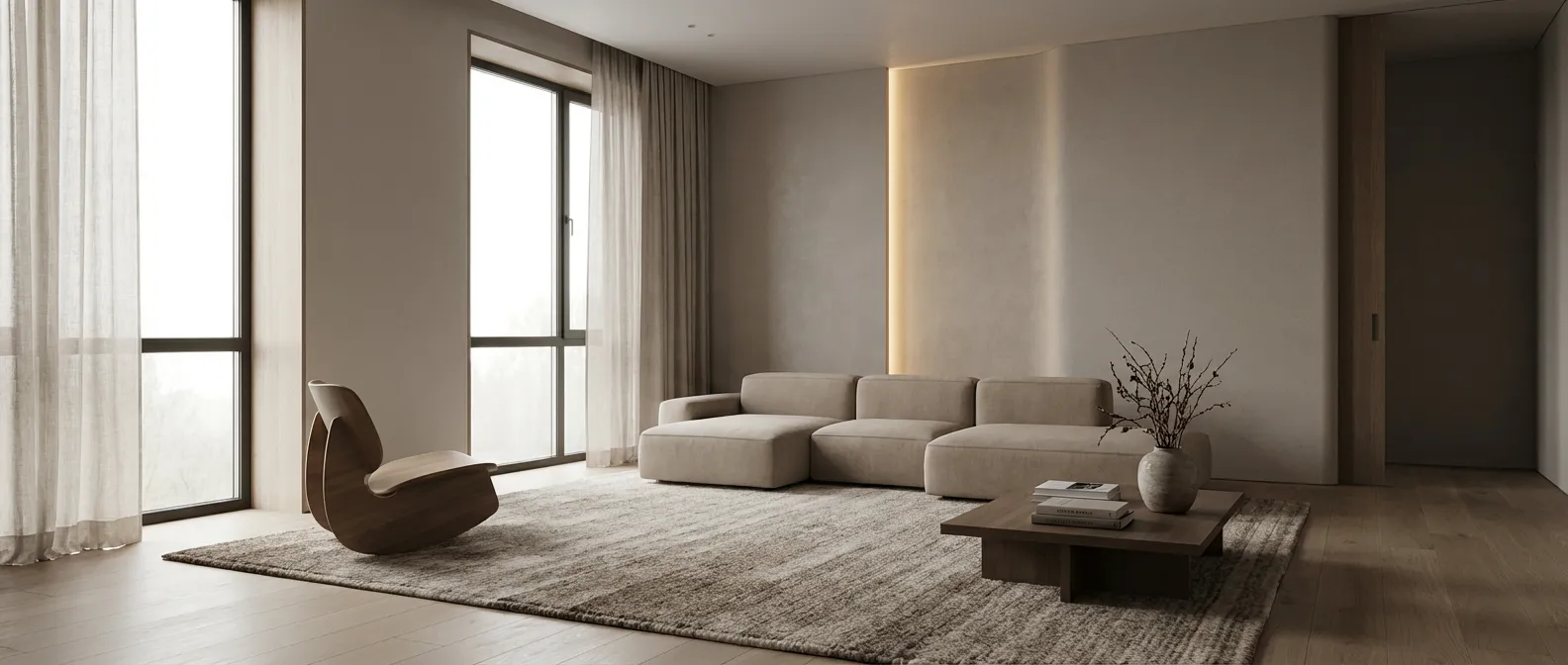
There is a quiet revolution happening in the way we think about our homes. It has nothing to do with minimalism as an aesthetic — the stark white rooms, the single vase on an empty shelf. It is something deeper: a return to intention, to asking ourselves what we truly need to feel at ease in the spaces where we live.
The Japanese concept of ma — the space between things — offers a useful framework. It suggests that emptiness is not absence but potential. A room with fewer objects is not a room that lacks something; it is a room that has made space for something else entirely: light, movement, breath, thought.
Objects as Companions
When we strip away the excess, what remains takes on a different quality. The ceramic bowl on the kitchen counter is no longer just a bowl — it becomes a daily companion, something your hands know by heart. The linen throw draped over the chair is not decoration but comfort, warmth, a small ritual of settling in at the end of the day. Living simply is not about deprivation. It is about elevating the ordinary to the essential.
The Discipline of Enough
Perhaps the hardest part of living simply is learning to recognize when you have enough. We are trained to acquire, to fill every corner and surface. But there is a particular satisfaction in a home that feels complete — not because every space is occupied, but because every object has earned its place. It is a practice, not a destination. And like all good practices, it rewards patience.